EMAIL MARKETING
The Best Email Marketing Strategy You’re Not Using Yet
July 12, 2025 • 7 Min Read
The Best Email Marketing Strategy You’re Not Using Yet
After years of running campaigns in a variety of fields, I’ve put together this email marketing strategy to help you master email marketing. These rules come from real campaigns, not theory. They help you build trust and loyalty.
For the past six or seven years, I have created successful email marketing campaigns for different fields clients with my proven email marketing strategy. I also looked at how clients from different areas and professions act online and how long it takes them to accept things.
One of my most important healthcare clients is a top biotechnology company in Europe. I have worked for a top e-commerce company in Indonesia and a number of well-known companies in Bangladesh in the e-commerce field.
I worked with the client to make complicated campaigns that included polls, surveys, behavior-based messaging, and custom content like e-books. If I add up all of my works, there are at least a thousand of them. My goal was to help clients get customers for life and build trust with them over time. My mission was to make trust the most important thing in the business.
I did this by learning about the contact based on their actions and the information I gathered over the course of building trust. Customers stayed longer, fewer people canceled, and interactions were more meaningful. This is how I did it.
Email Marketing Strategy to achieve Success
You could write a whole article about each of these steps of email marketing strategy. Please leave your message here or email me, if you want more information, have questions about email marketing strategy, or want me to write about a certain subject.
Step 1: Open the email INBOX
It takes a long time for your email to reach your contact’s inbox. To be successful, you need to get through email servers that check to see if you’re a spammer, if your client has blocked emails from you, or if your email delivery software couldn’t deliver because their reputation wasn’t great at the time. This can happen sometimes, like when a lot of spam comes from accounts on MailChimp, ConstantContact, or any other platform. Google and Microsoft, for example, might block emails from software companies.
Different vendors will have different rates of email delivery. Here, you can see how well your system can send emails.
- You can see the delivery rates for all of your contacts and for each one separately using your email marketing software. You should be able to tell if someone’s address is bouncing or if they have opted out.
- Make content that gets through spam filters so it doesn’t end up in the spam box.
- Stay away from words that make people click, like “free,” “exclusive offer,” “don’t miss out,” and “you’ve won.” A lot of email marketing tools have spam checks that help you get rid of these and other words that will make your messages look like spam.
#Step 2: Make the email your own
AI and automation can help you get what you want, but they can also make it harder to do so. Google has already lowered the rankings of thousands of websites that use content made by AI. Email might be looked at in the same way that spam is filtered now.
- Put money into learning how to write good copy and emails that get people to take action. Don’t send emails that sound like they were written by AI. They are boring and lifeless. Only use AI to improve your ideas; write with your personality and business brand in mind.
- You don’t have to try to sell something in every email. So, every email should give something of value from your point of view and personality.
- Don’t keep sending the same useless content and requests to buy to the person you’re trying to reach.
- Make sure to get the greeting right. Figure out the first name. Don’t send emails that say “Dear .” If you don’t have the first name, make your system start with “Hello” or “Hi.”
Make the email sound like a conversation. Talk to the reader as if you are writing to them.
Step 3: Make sure the email automation sequences are set to trust.
Marketing automation systems are great tools for making strong email sequences. The best way to use email automation is to have a conversation over email that is like a meeting in person, where you get to know each other and share things.
Building trust takes time, just like getting to know someone at a party. Your email sequences should build on each other to make your readers trust and believe in you more.
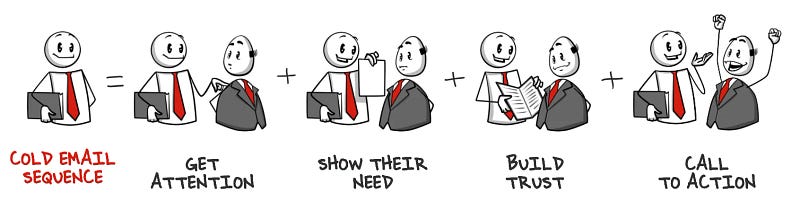
Collected from salesman.com
Step 4: Use your cadence to cut down on email fatigue.
To keep your communication style natural and conversational, change the pace of your email sequence. That’s a critical email marketing strategy. Don’t use patterns that look like automated emails.
Set up your automations to stop the flow of daily emails by skipping one day, then three days, then two days, and finally one day. It will look more natural to the person getting it, and it will give them time to think about what you sent them before.

Created by the author
Keep going until they do something. Some of my email sequences lasted more than six months, and I was surprised by how many sales happened in months four, five, and six. There are a lot of reasons why someone might not buy in the first week of your campaign.
Step 5: Hear, understand, and respond.
There is a popular statement,
“Listen to understand, not to answer.”
This means that we only half-listen sometimes because we’re thinking about how to respond before we hear the whole story. Email marketing Strategy works the same way for complicated, high-ticket sales.
- Do not send them information that does not fit with what they have asked for or what they are interested in. Based on the information you’ve gathered, go deeper and make content that they think was made just for them.
- Getting first-party data should be a top priority. The more you know about the person you first connect with, the better your long-term campaigns will be.
With this information, you can build more trust with your audience, send them relevant information, and build a real relationship that can lead to sales and referrals.
Step 6: Tagging and putting things into groups
Tag your contacts so you can be clear about the messages and content they should get. A tag could show who bought certain things or did something, like downloading an e-book.
Using tagging to segment your audience based on the information you’ve gathered can improve your sales process and give your audience more useful information and offers.
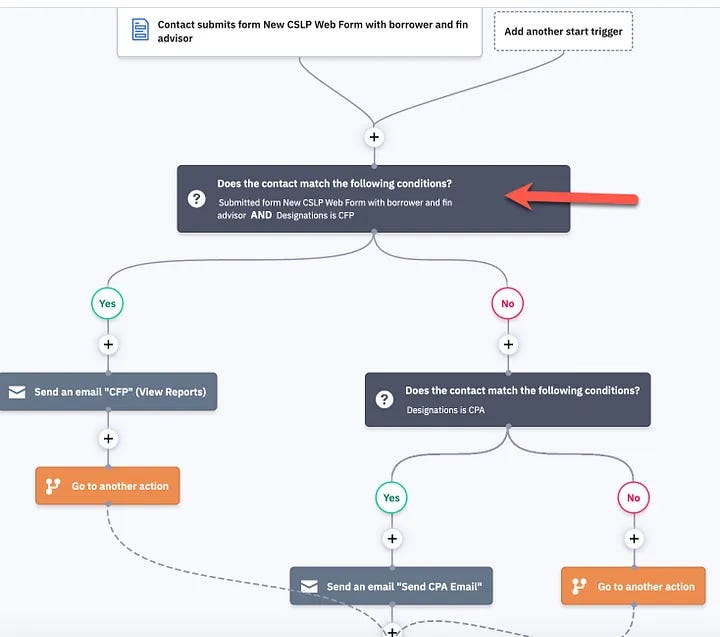
Created by Author
Step 7: Make a detailed page for people who want to unsubscribe.
Learn how to use your marketing automation system and set up the unsubscribe options. When people click the”unsubscribe” link in their emails, they will see a form that shows all the lists they are on.
Step 8: Keep the list up to date. Keep your lists clean all the time.
To make sure your list is clean, also known as scrubbing, do the following:
- This means getting rid of bounced email addresses and not trying to send emails to people who have unsubscribed.
- There are different ways for email marketing systems to keep their lists clean, but you need to do it often. I would suggest doing this at least once a month as part of your regular tech maintenance.
Step 9: Keep an eye on performance data
Don’t get too excited about open and click rates, because they might not be very accurate because of how your marketing system works. Use them to help you figure out what’s going on with your audience.
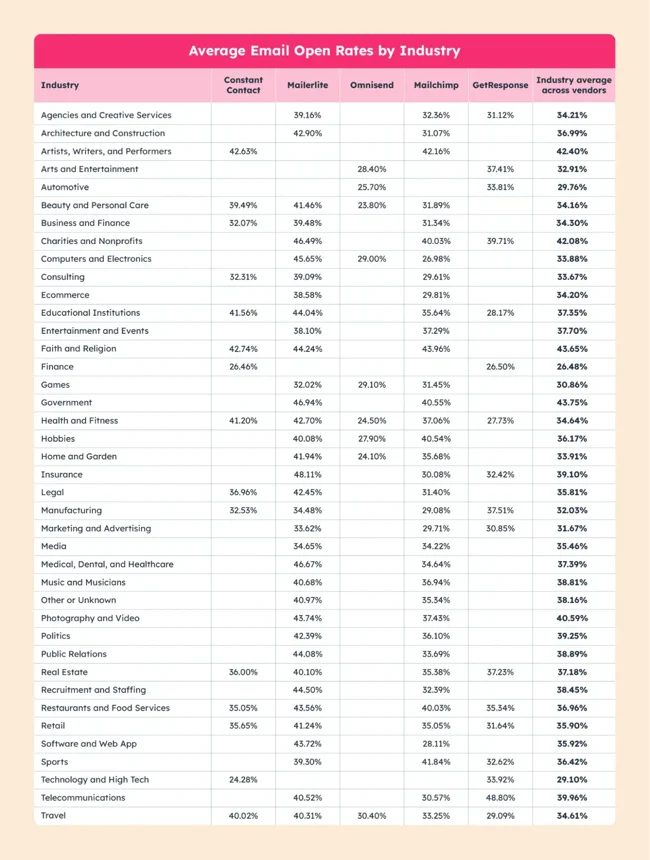
Average email Open Rate by Industry. Collected from HubSpot
Email marketing strategy isn’t something you can just set and forget. It’s a conversation that changes over time, and trust, relevance, and timing are all very important. Keep trying new things, listen to your readers, and most importantly, write like a person talking to another person.