FINTECH
Digital Wallet is the Game-Changer and Fueling Business Growth & Customer Loyalty
August 26, 2025 • 9 Min Read
Digital Wallet is the Game-Changer and Fueling Business Growth & Customer Loyalty
From simple payments to AI-powered intelligence: how today’s digital wallet are reshaping customer trust, loyalty, and business growth.
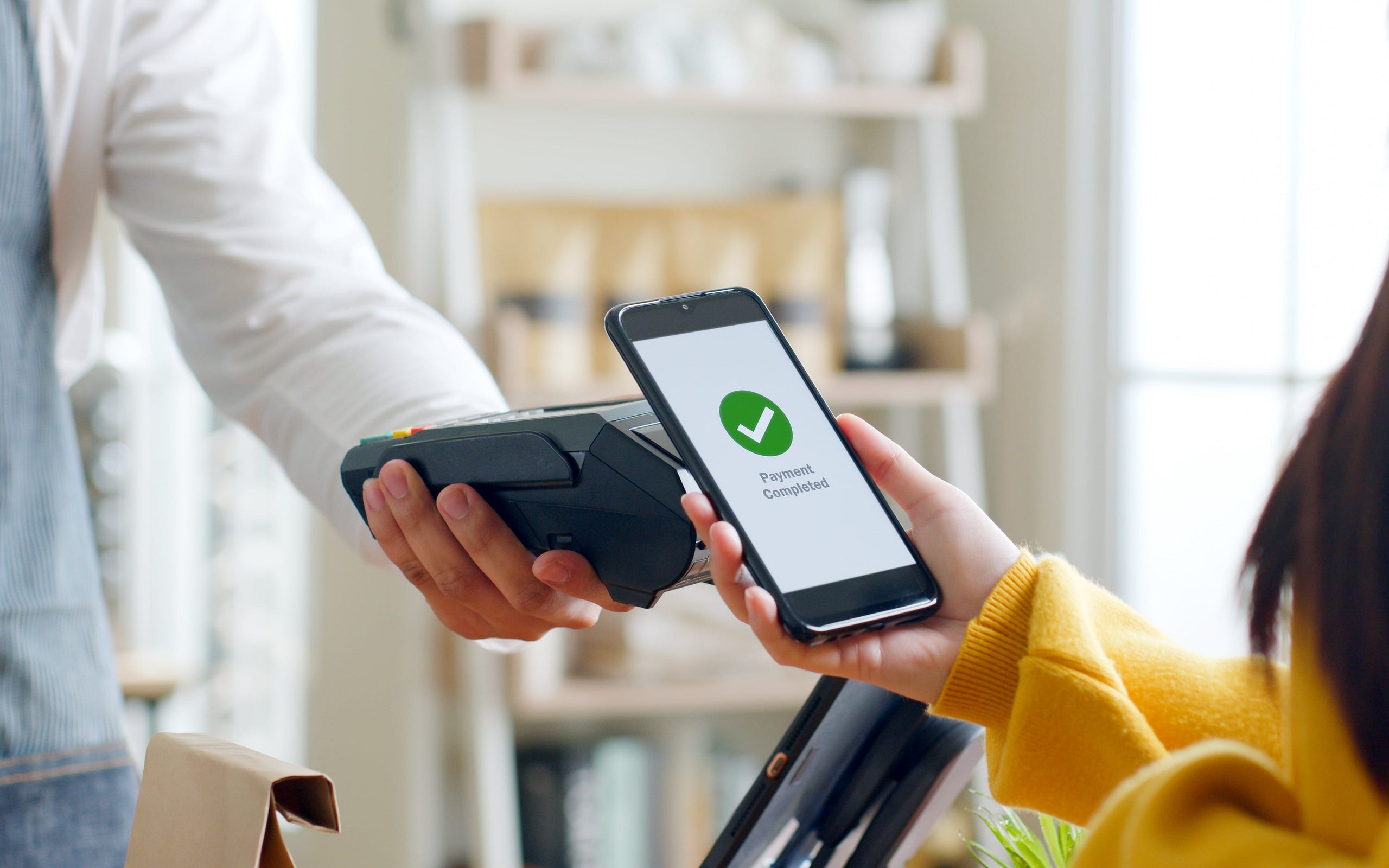
Payments using Digital Wallet
Imagine a customer browsing your site: they add items to cart and eagerly go to checkout… only to encounter a long, clunky payment form. By the time the page asks for their billing ZIP code, “they’ve already closed the tab. So, That’s one lost sale”. Multiply that by dozens of shoppers each week, and businesses bleed revenue in silent leaks. Now picture the alternative: the same customer taps a digital wallet in your app, confirms via Face ID, and “boom — payment done within just 3 clicks and only a few seconds.” They complete the purchase and “will come back again and again, because it was effortless”. This simple story highlights the cost of checkout friction — and the payoff when you embrace digital wallets to make payments instant, secure, and built-in with loyalty programs.
Digital wallets have sparked a payment revolution. Today over 4.3 billion people (more than half of the world’s population) use a digital wallet. In 2024, 83% of all digital payment volume ran through wallets, reflecting their ubiquity. For example, digital wallets accounted for 32% of global in-store (POS) transactions. And 53% of online purchases in 2024— outpacing any other payment method. Worldwide wallet spending reached a staggering $41.0 trillion in 2024, and is projected to grow to about $55.9 trillion by 2029. Now, in practical terms, analysts forecast global wallet transaction value will jump roughly 77% by 2028 (to over $16 trillion). Even in the U.S., digital wallets are mainstream — 57% of American adults now use one — and U.S. mobile wallet users each spent an average of $3,693 in 2024 (an 87% rise since 2020). In short, digital wallets are not just trendy — they already dominate payment flows and consumer wallets worldwide.
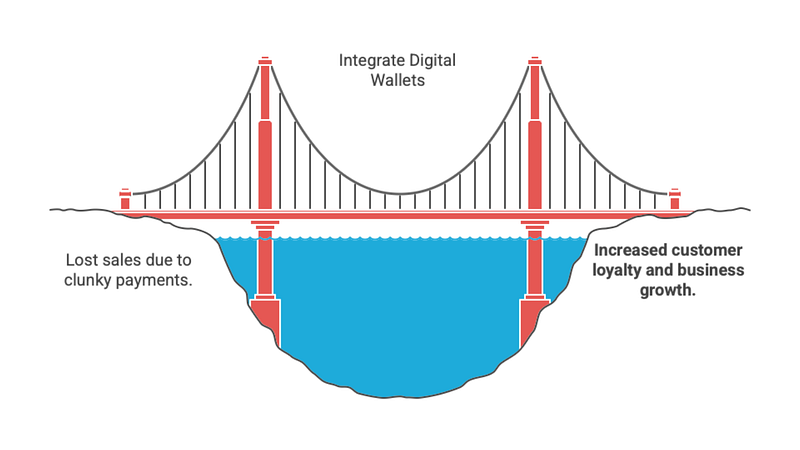
Having a Digital Wallet build customer loyalty
Digital Wallets in Action: Success Stories
Many leading companies have proven that wallets can turbocharge growth and loyalty when woven into the customer experience:
- Starbucks (Mobile Wallet + Loyalty): Starbucks was an early innovator, integrating its payment app with a rewards program. Customers preload funds and pay in-app with a “Starbucks Wallet,” earning Stars on every purchase. The results are striking: Starbucks Rewards members account for roughly 40–50% of U.S. revenue and spend 2.5–3× more per visit than non-members. In fact, Starbucks reports a 44% retention ratefor its app users — far above the typical 25% industry average — and 71% of app users visit at least weekly. The prepaid wallet even serves as an interest-free loan: Starbucks holds about $1.6 billion in stored value on customer accounts, which means fewer processing fees and a boost to margins (some analysts quip Starbucks is now “like a bank that sells coffee”). These figures show that by combining checkout convenience with loyalty, Starbucks turned its digital wallet into a sticky, profitable ecosystem.
- Grab (Super-App and Wallet): Singapore’s Grab started as a ride-hailing app but deliberately pivoted into a full-scale super-app by layering financial services on top. GrabPay — its mobile wallet — was built with loyalty at the core. GrabRewards points can only be earned by paying with GrabPay, ensuring customers keep using the wallet for rides, food delivery, groceries and more. This strategy fueled massive scale: Grab now boasts about 180 million users (31M active monthly) across eight countries. The GrabPay wallet is AI-enhanced for security, backed by “a proprietary risk and fraud detection system enhanced with advanced AI”. It also offers merchants easy access to customers — thousands of retailers accept GrabPay, often with a low 1% fee and instant daily settlements — and shoppers earn rewards each time. In effect, Grab turned its app’s popularity into a wallet-driven ecosystem that promotes both growth and loyalty across Southeast Asia.
- Shopify (Shop Pay — One-Click Checkout): Shopify’s “Shop Pay” is a built-in digital wallet/accelerated checkout for its merchants. It securely stores customer info for one-tap payments. Case studies show Shop Pay rapidly lifts conversions: for example, sustainable apparel brand Everlane saw Shop Pay capture 15% of shoppers in just 30 days, reaching record-high checkout conversions. Shopify notes that when a one-click option is available, “shoppers are 75% more likely to complete a purchase”. In practice, adding Shop Pay is effectively like adding a powerful sales boost. By streamlining checkout into a single tap, merchants reduce cart abandonment and unlock more repeat buyers — all by letting the digital wallet do the heavy lifting.
- Revolut (Fintech Wallet with Loyalty UX): Revolut started as a travel-friendly card app and evolved into a global neobank. It has grown explosively — 50 million users by 2024 (about 60 M by mid-2025)— without the traditional loyalty benefits of a branch bank. How? Revolut’s app focuses on user experience and empowerment. Users get instant payment notifications, easy currency exchanges, and even flashy achievements (“smart, international, and in control”) to reinforce identity. The result: Revolut “has built one of the stickiest, most emotionally loyal user bases in finance,” according to a fintech analyst. In other words, even a digital wallet/banking app can inspire real loyalty by making customers feel empowered and rewarded every time they transact.
Expert Perspectives on Digital Wallets
Industry leaders emphasize how pivotal wallets have become:
- PayPal (CEO Alex Chriss): As PayPal’s CEO notes, digital wallets around the world often operate in isolated “walled gardens” that work locally but fail cross-border. He warns: “The future of payments is cross-border, and it must be interoperable across domestic wallets. Walled gardens don’t deliver real customer benefit.”. In other words, seamless global growth hinges on connecting wallets and expanding where customers shop, not limiting them to local silos.
- Bain & Company: Consultants at Bain observe that “mobile and digital wallets as a form of payment have shown sharp, sustained growth because of their convenience in-store and online.”. By linking cards and accounts in one app, wallets remove payment friction — a point Deloitte, McKinsey and others echo — making checkout faster and safer. This explains why consumers are increasingly leaving their physical wallets behind. McKinsey’s own research found that “one in five digital wallet adoptees often leave home without their physical wallet”, a telling sign that trust in digital payments is surging.
- Curve (Fintech CEO Shachar Bialick): Even industry insiders admit the challenge of displacing entrenched wallets. Curve’s CEO quips, “The problem that everyone in the wallet wars has is, why would I, as an Apple customer, move away from Apple that works pretty damn good?”. In other words, to gain loyalty one must offer something noticeably better. Curve addresses this by offering a “staged wallet” (through its app) that aggregates multiple cards and provides full transaction visibility. This lets Curve layer on advanced features — like “AI-driven fraud detection to identify and block suspicious activity in real time” — giving customers new reasons to use its wallet even if they already have another.
These expert views all point to the same conclusion: Digital wallets are central to future payments. They demand convenience, security and interconnectedness. Firms ignoring this shift risk falling behind.
How AI Powers Next-Gen Wallets
Modern digital wallets aren’t just payment tools; they’re smart platforms. Artificial intelligence amplifies their value in three key ways:
- Fraud Detection & Security: AI and machine learning monitor transactions for fraud and risk. For example, Grab’s wallet has a “proprietary risk and fraud detection system enhanced with advanced AI”. Likewise, Curve’s CEO highlights how a centralized wallet enables “advanced analytics and AI-driven fraud detection to identify and block suspicious activity in real time”. These capabilities mean unusual purchases (like sudden large transfers or out-of-pattern locations) are flagged instantly, protecting both consumers and businesses.
- Personalized Offers & Loyalty: AI analyzes users’ spending patterns to tailor rewards and promotions. By predicting what customers want, wallets can serve targeted coupons, dynamic discounts, or suggested purchases directly in the app. Enhanced personalization via machine learning “fosters stronger customer relationships”. In practice, this means a clothing app’s wallet might push a flash-sale alert on a category you browse often, or a coffee shop’s wallet upsell you on a pastry you like. These smart incentives keep customers engaged and spending.
- Chatbot Integration & 24/7 Support: Conversational AI chatbots in wallets can answer payment questions and even process transactions. For example, customers having checkout trouble can chat with a bot that securely guides them through payment or re-applies a stored card. Studies show that deploying chatbots in payments “helps provide 24/7 service that is conversational for customers who are experiencing difficulties with the payment process”. This both saves businesses time and keeps customers from bouncing out when issues arise — a big win for loyalty.
Together, these AI layers make digital wallets more than static checkouts. They become dynamic engagement hubsthat learn from each purchase, keep accounts safe, and treat customers as individuals. For startups, this means leveraging AI wallets can translate into fewer fraud losses and more returning users.
Takeaways: Actionable Steps for Founders
For tech founders and product leaders, the message is clear: embrace digital wallets or risk missing out. Streamline your checkout with popular wallet options (Apple Pay, Google Pay, PayPal, etc.) to eliminate friction. Tie wallets into your loyalty strategy — reward wallet users with points or perks to lock in repeat business. Leverage the data and AI tools that come with wallets to personalize offers and bolster security.
And don’t wait: as experts warn, the wallet revolution is already here. Start by assessing your current payment UX — if customers regularly abandon carts, try adding a digital wallet button or express checkout. Pilot a loyalty wallet or gift-card wallet feature for your most frequent customers. Use analytics (often included with wallet APIs) to track increased conversion and retention.
Explore digital wallet integrations today. Whether you’re a retailer, app developer, or fintech startup, adding a digital wallet can remove checkout barriers now and build the loyalty your business needs. The data is undeniable: wallets drive higher spend, repeat visits, and customer trust. Remove the payment friction holding you back — adopt a digital wallet strategy and let the momentum of this game-changing technology fuel your growth.